About Indiana Brain Mapping
Brain Mapping for Clearer Conversations, Not Quick Labels
Indiana Brain Mapping helps clients and families better understand brain activity, connectivity, and possible next steps through non-invasive EEG and qEEG brain mapping assessments in Carmel, Indiana.
Many people come to us after they have already tried a few things, but something still is not clicking. A qEEG assessment gives you a neurological baseline, a clearer look at how the brain is currently operating, so future conversations can be more specific and useful.

Non-invasive assessment
Nothing is inserted and no current is sent into the brain. The sensors only record activity.
EEG Cap Collection
Brainwave data from the scalp
qEEG Analysis
Compared with typical patterns
Detailed Reports
Clear documentation for next steps
Carmel, IN
Serving Hamilton County families
What We Do
A Data-Informed Look at Brain Function
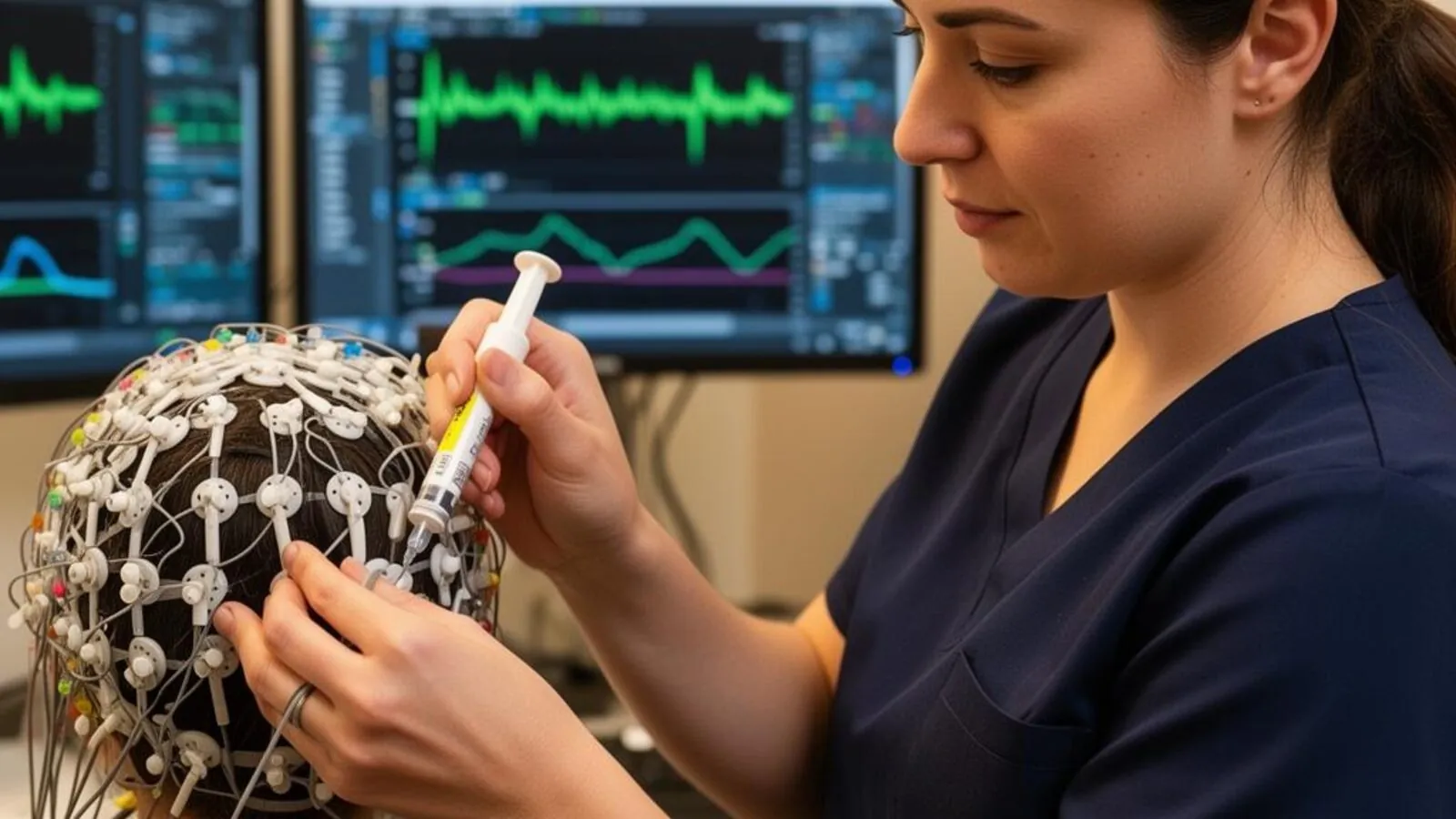
We use conventional EEG and quantitative EEG technology to visualize patterns in brain activity and connectivity. During the assessment, sensors placed across the scalp collect the brainwave signal, which is then measured, mapped, and reviewed carefully.
The goal is not to reduce someone to a label. The goal is to provide useful information when symptoms, school struggles, attention concerns, mood patterns, sleep issues, or cognitive changes need a more organized explanation.
01
Record
Brainwave activity is collected through an EEG cap while the client sits comfortably.
02
Review
The data is checked carefully so blinking, movement, or signal noise are not treated as meaningful findings.
03
Map
The results help show where activity patterns may fall outside expected ranges.
04
Discuss
The findings are explained in plain language so the next conversation is clearer.
Who We Help
For People Who Need More Than Guesswork
A qEEG brain mapping assessment can be useful when something has not been adding up and you need clearer information to guide the next step.
Children and Students
For families trying to better understand attention concerns, learning struggles, school accommodations, or behavior patterns that need more context.
Adults Seeking Clarity
For adults dealing with cognitive fog, mood patterns, sleep issues, stress responses, or a sense that current support is not fully addressing the problem.
Post-Concussion Questions
For people who still do not feel like themselves after a concussion or TBI, even when standard tests have not explained the full picture.
Documentation Needs
For clients who need a more organized report to support conversations with clinicians, therapists, schools, or support agencies.
Our Approach
Specific Information, Explained in Human Language
Brain mapping can show patterns that are not visible on an MRI, in bloodwork, or through everyday observation alone. Some areas may appear overactivated, some underactivated, and some regions may not coordinate as expected.
We take that information and turn it into a clearer conversation. Clients should understand what the map suggests, what it does not prove, and how it may support the next decision.
- Plain-language explanations
- Careful data review before interpretation
- Reports designed to be shared with other providers
- Respect for the client beyond a diagnosis or label
Meet the Doctor
Dr. Jane Yip
PhD, BCBA
Director of Autism Parent Care
NGO member of UN
Indiana Brain Mapping’s staff is trained in the neuroscience of brain circuits involved in different mental and learning-related concerns. The team has performed brain maps for individuals with autism, depression, bipolar disorders, learning disorders, and early onset Alzheimer’s disease.
The work is service-based and personal. We help clients and families use brain mapping information to ask better questions, understand current brain function more clearly, and explore practical next steps with the right professionals when needed.
Reports and Next Steps
Clear Documentation for Bigger Conversations
A written report can make the results easier to discuss after the appointment. Reports may help families, schools, clinicians, therapists, or support agencies understand what was observed during the assessment.
When appropriate, detailed report writing may support requests for special consideration in school settings or for social security disability insurance, including SSDI or SSI. Outcomes are never guaranteed, but organized information can make the next conversation more focused.
What the report can help clarify
- Brain activity and connectivity patterns
- Areas that may fall outside expected ranges
- Information to bring into clinical or school conversations
- A baseline that can be referenced over time
Important Note
Brain Mapping Is Informational, Not a Diagnosis
Brain mapping is not an official diagnostic tool. It is a method used to investigate brain connectivity and activity by comparing current brainwave patterns with broader population data. Diagnosis should come from the appropriate licensed medical, psychological, or educational professional.
Please note: Indiana Brain Mapping currently focuses on brain mapping, qEEG assessment, interpretation, and report writing. We do not currently offer neurofeedback services.
Common Questions
What People Usually Ask Before Booking
What does qEEG brain mapping measure?
qEEG records the electrical activity the brain produces through sensors placed on the scalp. The data is measured, mapped, and compared with typical patterns to help show how different regions may be operating or coordinating.
Is the assessment uncomfortable?
No. The sensor cap may feel snug, but nothing is inserted and no current is sent into the brain. The sensors only record the activity the brain is already producing.
Can the report be shared with a therapist, psychiatrist, or school?
Yes. Reports are designed to make brain mapping information easier to discuss with other providers, schools, support agencies, or family decision-makers. The report does not replace those relationships. It gives them more information to work with.
Do I need a diagnosis before scheduling?
No. qEEG can be useful when you have a question worth answering, whether or not a formal diagnosis is already in place. It provides a neurological baseline, not a standalone diagnosis.
Start With a Clearer Conversation
If you are trying to decide whether a qEEG brain mapping assessment makes sense for you or your child, Indiana Brain Mapping can help you talk it through before you schedule.